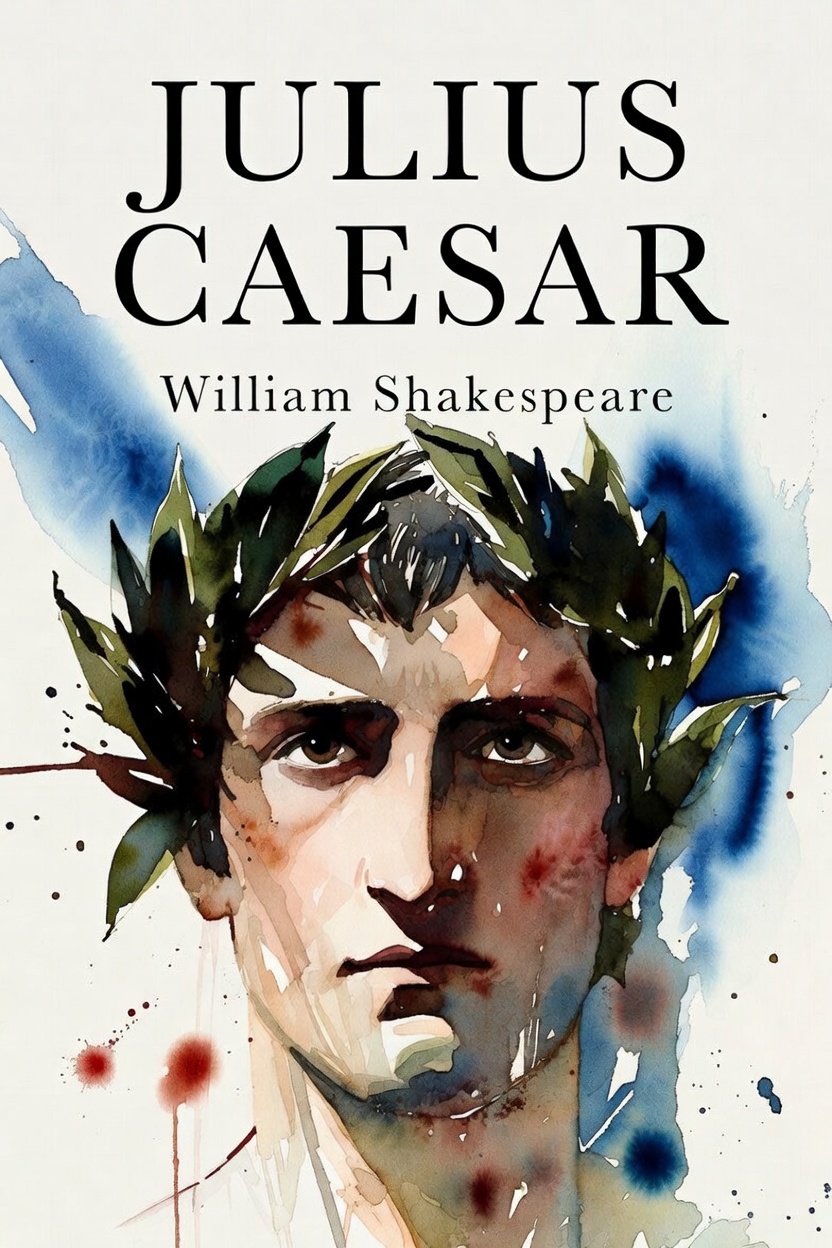
In ancient Rome, political ambition and loyalty collide as a conspiracy forms against the powerful Julius Caesar. Led by Brutus, who struggles between friendship and duty to the republic, the plot sets off a chain of betrayal, assassination, and chaos. In William Shakespeare’s Julius Caesar, questions of power, honor, and persuasion take center stage—revealing how rhetoric and ambition can shape the fate of nations.
Date: 1599 (United Kingdom)
Length: ~170 pages (varies by edition)
Cultural impact: ~12.350.000 copies (estimates)
Genre: Poetry & Drama, Classics
Othello King Lear MacBeth The Odyssey Tale of Two cities Wealth of Nations
"The fault, dear Brutus, is not in our stars, but in ourselves, that we are underlings" — Edward R. Murrow, influential American broadcaster and journalist
"No play of Shakespeare’s has so many [monosyllables], so superbly used" — Mark Van Doren, American poet, critic, and Pulitzer Prize-winning
"Julius Caesar remains a timeless masterpiece, its themes and characters continuing to captivate audiences with their profound insights into power, loyalty, and the human condition" — Harold Bloom, renowned literary critic and author of Shakespeare: The Invention of the Human
"Now, I said that Shakespeare's 'Julius Caesar' is the most splendidly written political melodrama that we possess" — George Bernard Shaw, influential playwright and critic
"Cowards die many times before their deaths; The valiant never taste of death but once" — Thomas Jefferson, U.S. President (referencing this line from Caesar in Act 2)
"There is a tide in the affairs of men, Which, taken at the flood, leads on to fortune; Omitted, all the voyage of their life Is bound in shallows and in miseries. On such a full sea are we now afloat; And we must take the current when it serves, Or lose our ventures" — Winston Churchill, British Prime Minister (quoting Cassius from Act 4 in a 1943 staff memo during WWII)
Be the first to review this book!
*As an Amazon Associate we earn from qualifying purchases.