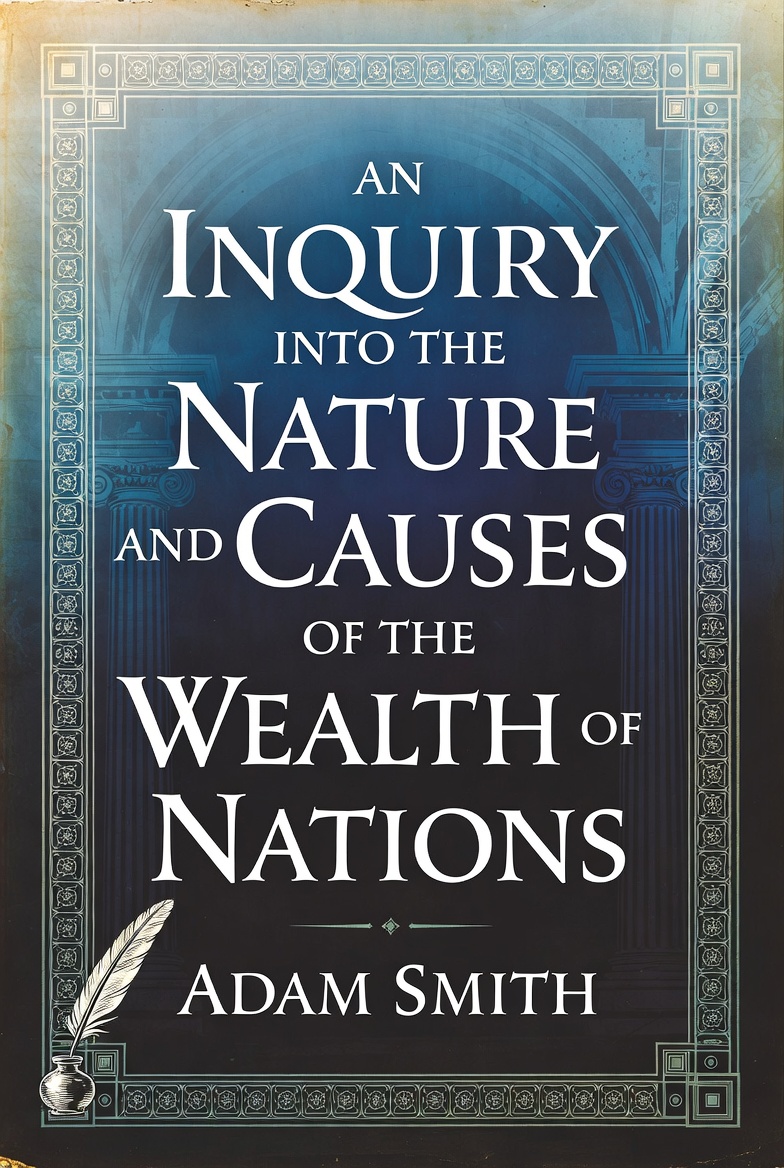
In a world shaped by trade, labor, and emerging markets, Scottish philosopher Adam Smith examines the forces that generate prosperity and economic growth. Through ideas such as the division of labor, free markets, and the “invisible hand,” he explains how individual self-interest can drive collective wealth. The Wealth of Nations is a foundational work of modern economics—exploring productivity, commerce, and the principles that continue to influence global economic thought.
Date: 1776 (United Kingdom)
Length: ~524 pages (varies by edition)
Cultural impact: ~10.000.000 copies (estimates)
Genre: Business & Economics, Philosophy
"The Wealth of Nations is probably the most important book that has ever been written, and is certainly the most valuable contribution ever made by a single man towards establishing the principles on which government should be based" — H.T. Buckle, influential 19th-century English historian and philosopher
"In political economy, I think Smith's Wealth of Nations the best book extant" — Thomas Jefferson, principal author of the U.S. Declaration of Independence and third U.S. President
"The Wealth of Nations [is] a work that one contemplates with awe. In keenness of analysis and in its range it surpasses any other book on economics" — Ronald Coase, Nobel Prize-winning British economist
"The Wealth of Nations is the most successful not only of all books on economics but, with the possible exception of Darwin's Origin of Species, of all scientific books that have appeared to this day" — Joseph Schumpeter, influential Austrian-American economist
"There is not a line in The Wealth of Nations that is not still applicable..." — Milton Friedman, Nobel Prize-winning American economist
"Smith was the first to recognize how a market economy can harness self-interest to the common good, leading each individual as though by an invisible hand to promote an end which was no part of his intention” — Paul Krugman, Nobel Prize-winning economist
1 review
The Wealth of Nations, published around the time of the American War of Independence, can easily be considered one of the most important books ever written. Adam Smith explains with remarkable clarity and precision why some nations are wealthier than others.
He also puts forward ideas that still feel striking today -on why Africa has struggled economically, why the Spanish Empire lagged behind the British, and why Mediterranean civilizations developed as they did, pointing to the underlying forces behind these differences.
In doing so, he laid the foundations of modern economics. Since then, capitalism has evolved and grown far more complex, but these core ideas remain essential.
The worst: Ignore Smith, and the cost is high.
Reading: 4 Art: 4 Wisdom: 10 Author: 9 Total: 9 Read count: 2 / May 4, 2026
Reading: 4
Art: 4
Wisdom: 10
Author: 9
Total: 9
Read count: 2 / May 4, 2026*As an Amazon Associate we earn from qualifying purchases.