— Nobel Prize in Literature (1946)
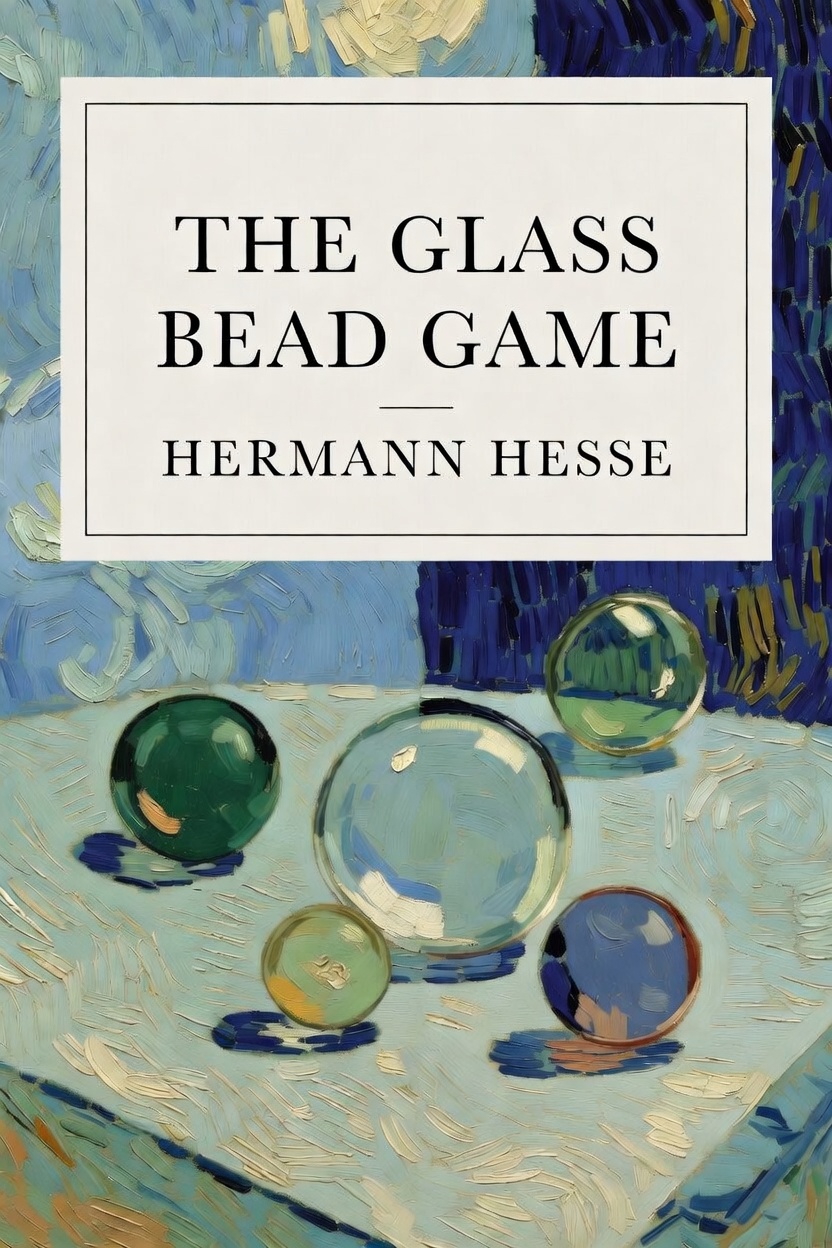
Set in a distant intellectual utopia, Joseph Knecht dedicates his life to mastering the intricate Glass Bead Game, a pursuit blending art, science, and philosophy. As he rises through the ranks of the Castalian Order, he grapples with the tension between contemplative study and engagement with the real world. In Hermann Hesse’s The Glass Bead Game, the story explores the balance between intellect and humanity, tradition and innovation, and the search for meaning in the life of the mind.
Date: 1943 (Switzerland)
Length: ~558 pages (varies by edition)
Cultural impact: ~1.000.000 copies (estimates)
Genre: Science Fiction, Philosophy
"Hesse's most ambitious and intellectually demanding work" — Theodore Ziolkowski, literary scholar and critic
"A visionary novel of the life of the mind" — Harold Bloom, preeminent literary critic
"A work of extraordinary spiritual discipline" — Thomas Mann, Nobel Prize-winning German novelist
"A masterful synthesis of intellect and spirituality" — Joseph Campbell, mythologist and author of The Hero with a Thousand Faces
1 review
Hermann Hesse was awarded the Nobel Prize in Literature shortly after World War II -a meaningful recognition, especially considering how the prize had been disrupted during those apocalyptic years.
This novel, published in 1943, is contemporary with events such as the Battle of Stalingrad. However, I didn’t find it as complete as some of Hesse’s other works. The story felt less captivating and, at times, less meaningful than his best novels.
My edition also included a short story, The Rainmaker, and that one truly stood out. It carried the same magic and sense of perfection I experienced when reading Siddhartha or Narcissus and Goldmund.
The best: The Rainmaker was simply exquisite.
Reading: 7 Art: 6 Wisdom: 6 Author: 7 Total: 6 Read count: 1 / April 28, 2026
Reading: 7
Art: 6
Wisdom: 6
Author: 7
Total: 6
Read count: 1 / April 28, 2026*As an Amazon Associate we earn from qualifying purchases.