
.
Crafting an Empire: How Isaac Asimov Wrote the Foundation Series
In August 1941, 21-year-old Isaac Asimov walked to a meeting with legendary editor John W. Campbell and suddenly conceived one of science fiction’s greatest epics. Fresh from reading Edward Gibbon’s The History of the Decline and Fall of the Roman Empire, Asimov imagined a galactic counterpart: a vast human empire crumbling into 30,000 years of barbarism. On the spot, he invented Hari Seldon’s science of psychohistory -the mathematical prediction of mass human behavior, drawn from his chemistry studies (just as one cannot predict a single molecule but can forecast an entire gas). Campbell loved the pitch. By the end of their two-hour talk, the Foundation series was born.
Asimov wrote the stories in his West Philadelphia apartment while holding a day job as a chemist at the Philadelphia Naval Yard during World War II and pursuing his doctorate. The first tale, “Foundation” (later retitled “The Encyclopedists”), appeared in Astounding Science-Fiction in May 1942. Seven more stories and novellas followed over the next eight years, published through January 1950. They were never planned as a single novel. Asimov composed them episodically, each a self-contained puzzle of politics, trade, or crisis, building the legend of the Foundation step by step.
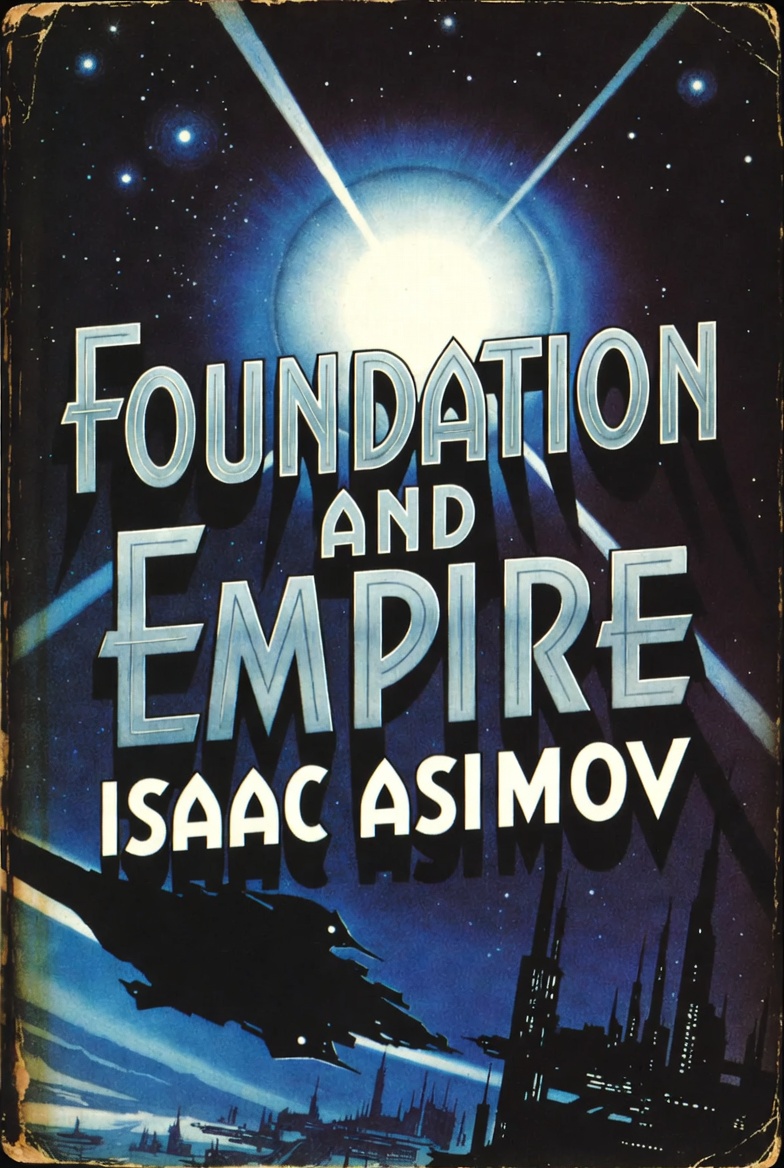
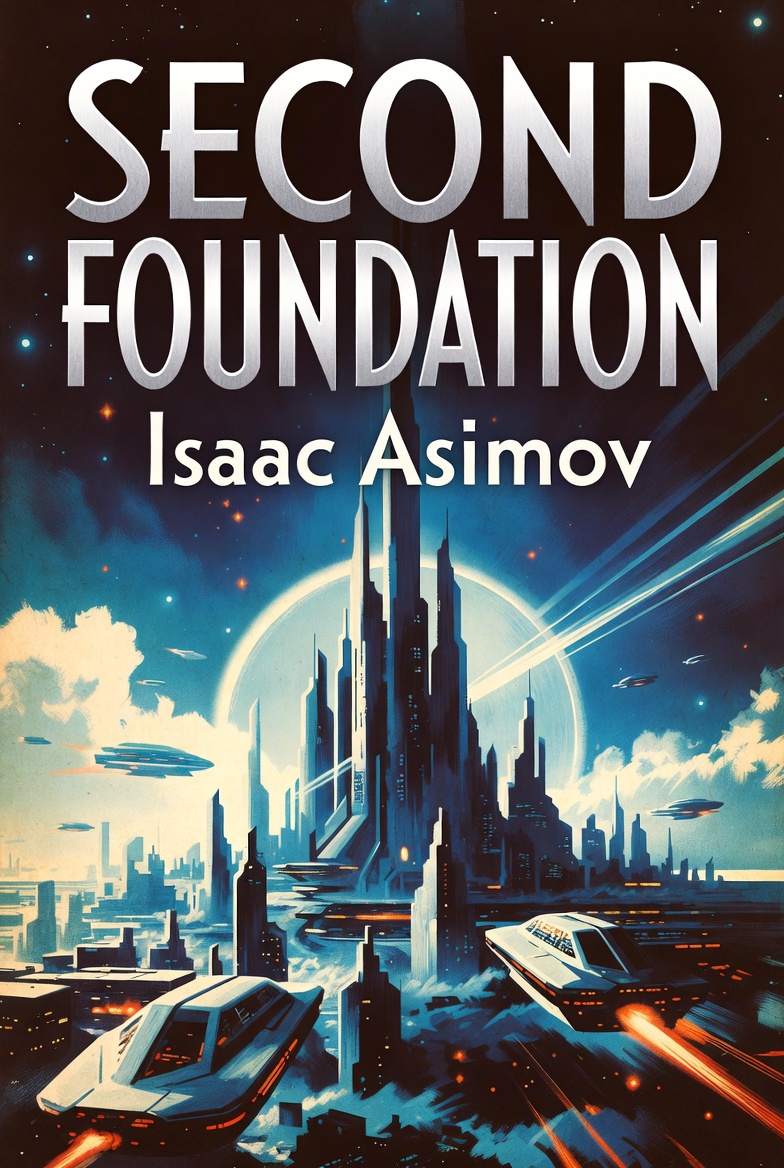
In 1951, Gnome Press collected the early stories -plus a new prologue, “The Psychohistorians”- into Foundation. Foundation and Empire and Second Foundation followed in 1952 and 1953, forming the original trilogy.
Asimov’s main struggles were practical, not creative. He balanced writing with full-time work and studies, producing the roughly 220,000 words of the core stories amid wartime demands and modest pay. The serialized format made continuity difficult; he admitted tearing up early outlines and occasionally bending psychohistory’s rules (most famously with the unpredictable Mule) to keep the plot moving. Yet he remained astonishingly prolific, letting the story evolve organically rather than forcing a rigid master plan.
What began as magazine pulp became a landmark of “hard” science fiction, proving that grand ideas and quiet intellectual drama could captivate readers. Asimov thought he had finished the series in 1950. Readers -and later publishers- would convince him otherwise decades later. But the original Foundation trilogy remains his enduring masterpiece: written fast, under pressure, and with the confidence of youth.
Foundation Second Foundation Foundation & Empire Siddhartha